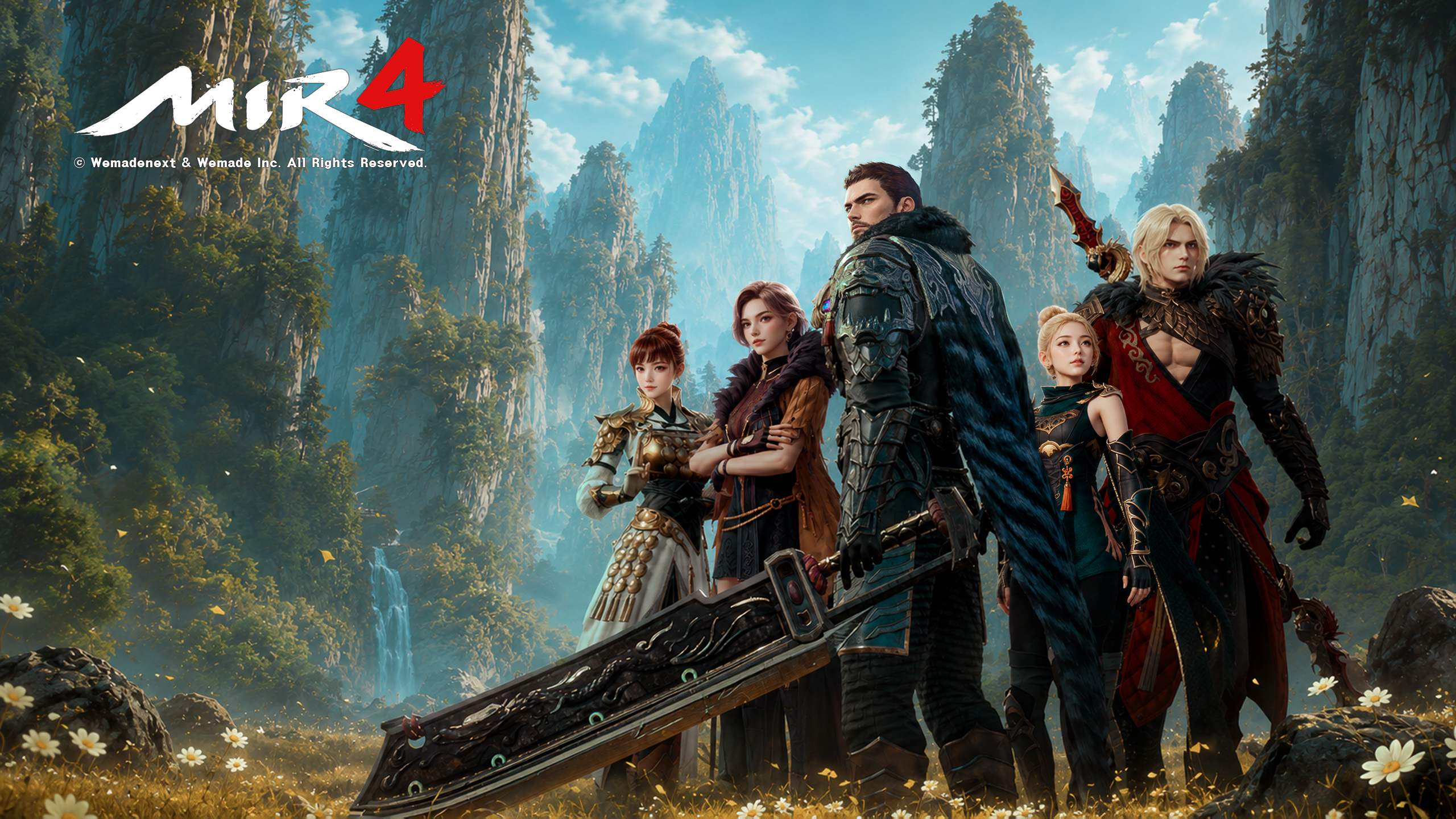
How does a game character get a look of their own? Behind the costume design of MIR4, an East Asian-inspired martial arts fantasy MMORPG.
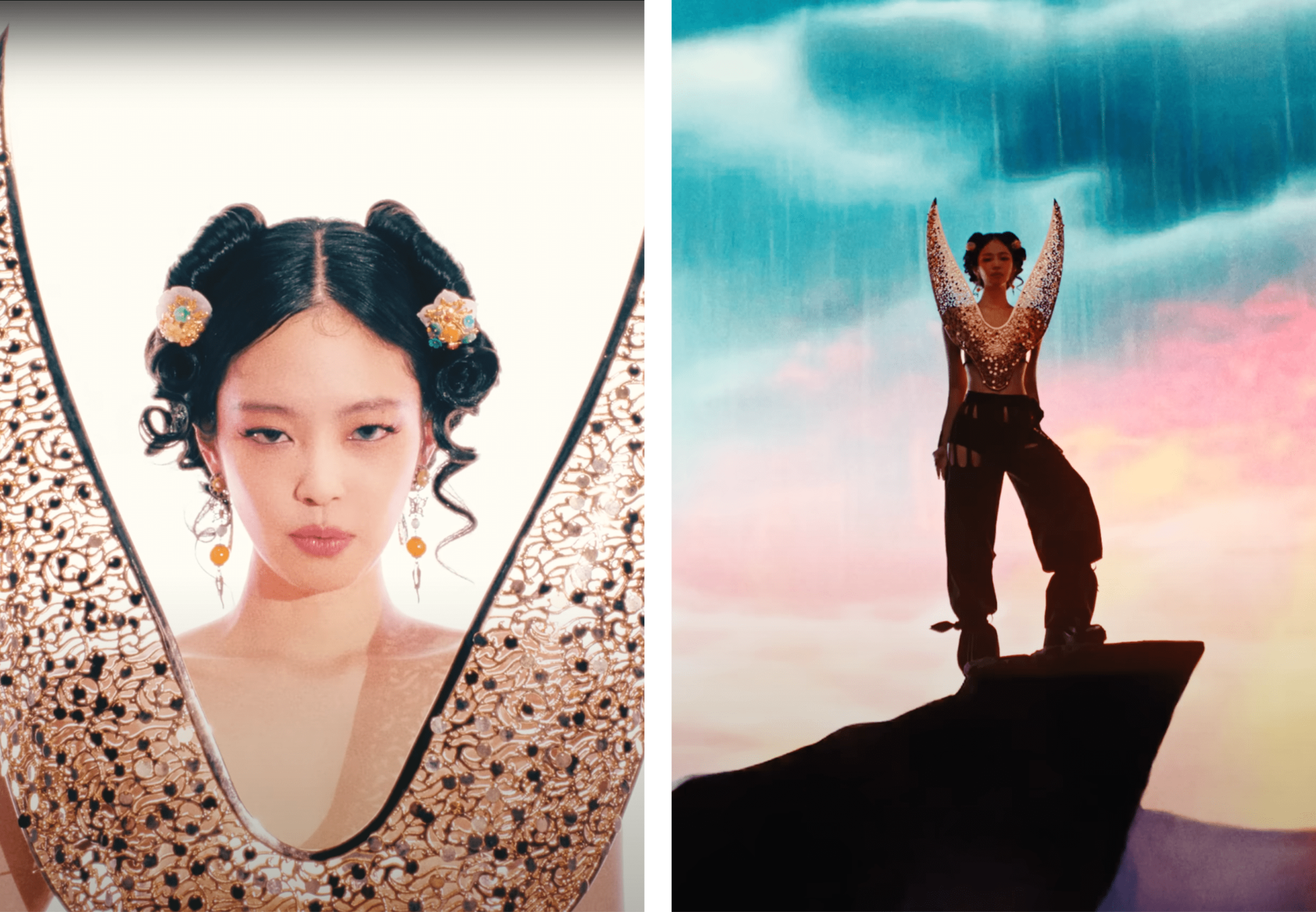
In the music video for “ZEN,” JENNIE appeared in an outfit that was hard to miss.
A top featuring large golden embellishments extending on both sides, paired with bottoms boasting a voluminous silhouette. At first glance, the outfit appears futuristic, but its origins lie in cultural heritage of the past. This ensemble is a reinterpretation inspired by the gold crowns of the Silla Dynasty and the “salchang gojangi”—a traditional women’s skirt worn during the Joseon Dynasty. Images drawn from historical clothing and accessories have been reimagined with a modern sensibility, giving rise to an entirely new look.
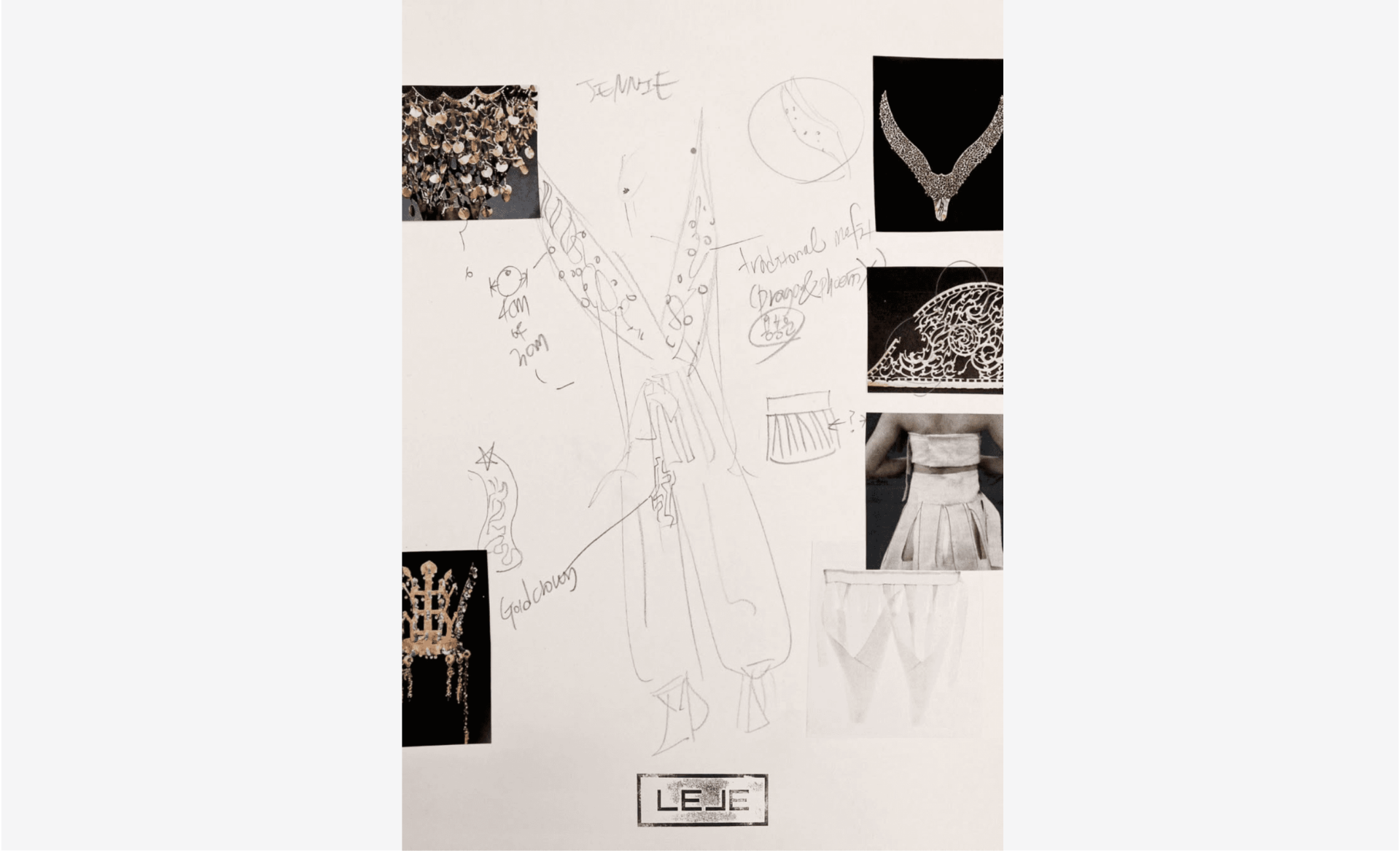
Discovering new design possibilities in ancient cultural heritage isn’t limited to the world of fashion. When creating character outfits for 〈MIR4〉, an Eastern martial arts fantasy, artifacts from the past also serve as a vital source of inspiration. We’ll follow the process from the moment that imagination takes shape as a design until it’s finalized as the appearance of a character in the actual game.
Before Beauty: Drawing Movement
If you were to dress a character in a video game, what would you consider first? You might think of flashy accessories or impressive armor right away. However, the design of a video game character’s outfit is based on different principles than those of everyday clothing.
The characters in the game are constantly moving, and each fights in a different way.
If a warrior who wields a massive sword and a mage who casts dazzling spells were to wear the same outfit, the differences in their powers and combat styles would not be clearly evident. Therefore, the weapons a character uses and how they fight serve as a crucial starting point for costume design.
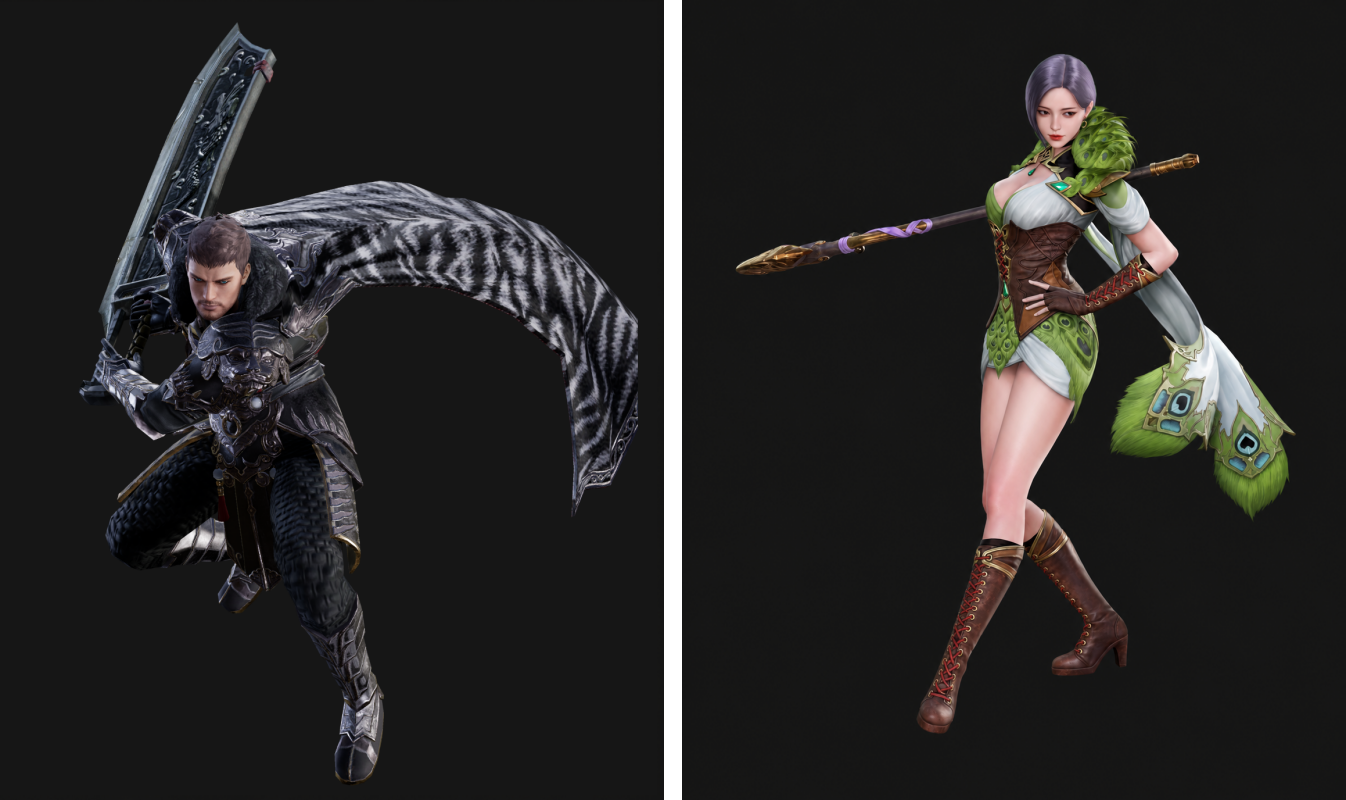
For example, strength and sturdiness are important for a warrior who wields a massive sword. The armor that covers the shoulders, arms, and legs not only protects the body but also serves as an element that highlights the character’s resilience. The weight and silhouette of the outfit are designed to complement the movements involved in wielding a large weapon.
In contrast, mages who wield the elements of nature emphasize a flashy and agile appearance over physical heft. Their robes, which flow gracefully along the contours of their bodies, make the movements involved in casting spells appear even more dramatic. Unlike warriors who wield weapons directly, the gestures used to cast spells and the flow of their robes as they move are key elements that define these characters.
〈MIR4〉 A compilation of in-game combat scenes. You can see the character's clothing fluttering with their movements and their graceful curves.
Here, the challenges of costume design take on a whole new level of complexity.
Can the appearance of a character in a still concept art image still look natural even when the character is actually wielding a weapon and moving?
For example, let's consider a suit of armor that covers the shoulders extensively.
In still images, the more you emphasize the volume of the shoulders, the more powerful the character may appear. However, the situation changes when the character raises a weapon or swings their arm widely. This is because if the armor covers the neck and arms too much, it may overlap with the body or weapon the moment the arm moves.
〈MIR4〉 Warrior Character Introduction Video.
This is when the 3D designer steps in. Designs that looked great in the concept art often come back for revisions because they require adjustments during the process of being realized through 3D modeling and animation. The concept artist then adjusts the angles or positions of the armor, and sometimes removes decorative elements or simplifies the structure of the costume. To ensure the character maintains its originally intended strong presence while moving naturally, the artwork and 3D models undergo multiple rounds of coordination. The key is not to simply reproduce the appearance of the initial concept art exactly, but to ensure that the character retains its intended charm even when in motion.
Clothing in games doesn't just sit still like pieces on display. It has to move along with characters as they run, attack, and spin.
While a still image allows us to imagine movement based solely on the curves of the fabric, in a game, those curves must actually be made to move.
A Sense of Reality That Brings the World of Imagination to Life
Costumes in Eastern fantasy feature unique patterns, silhouettes, and elaborate embellishments rarely seen in the real world. However, giving free rein to one’s imagination and creating believable clothing are two slightly different matters. Overly exaggerated embellishments can actually diminish a character’s sense of realism, while, conversely, if the clothing resembles real-world attire too closely, the unique charm of fantasy fades. Finding the right balance between the two is crucial.
To address these challenges, the production team of *MIR4* sometimes commissions actual fashion designers to create designs.
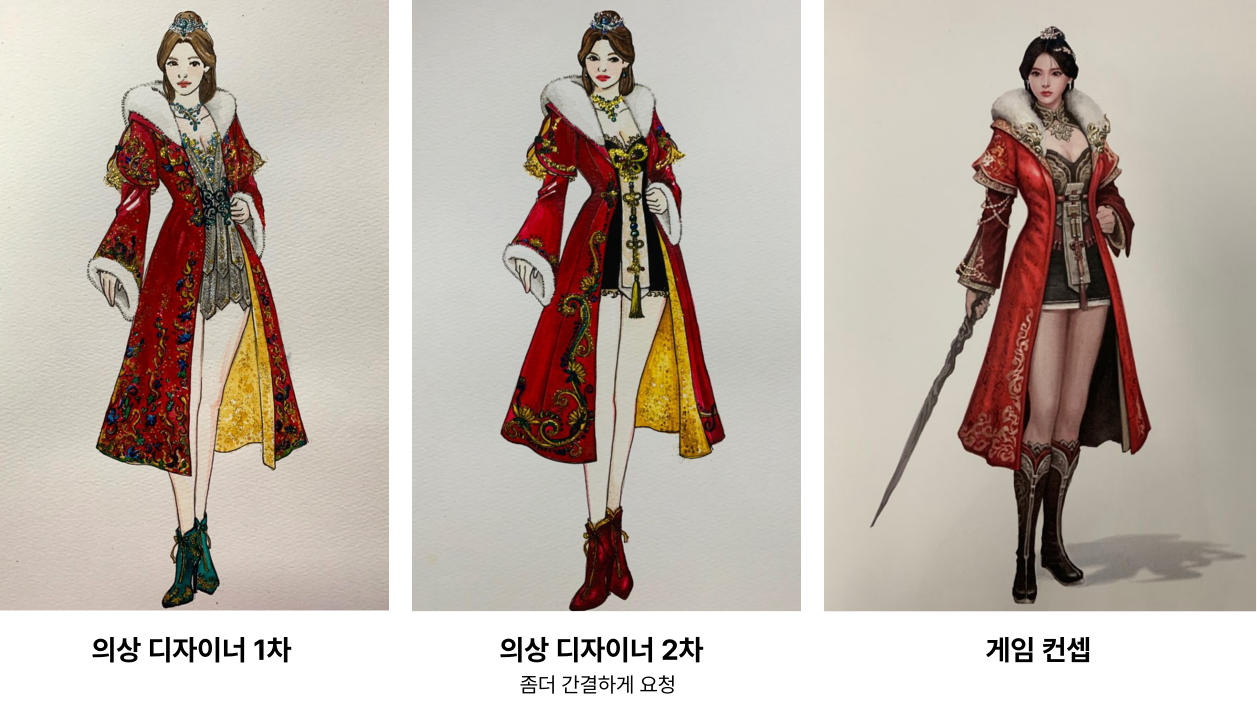
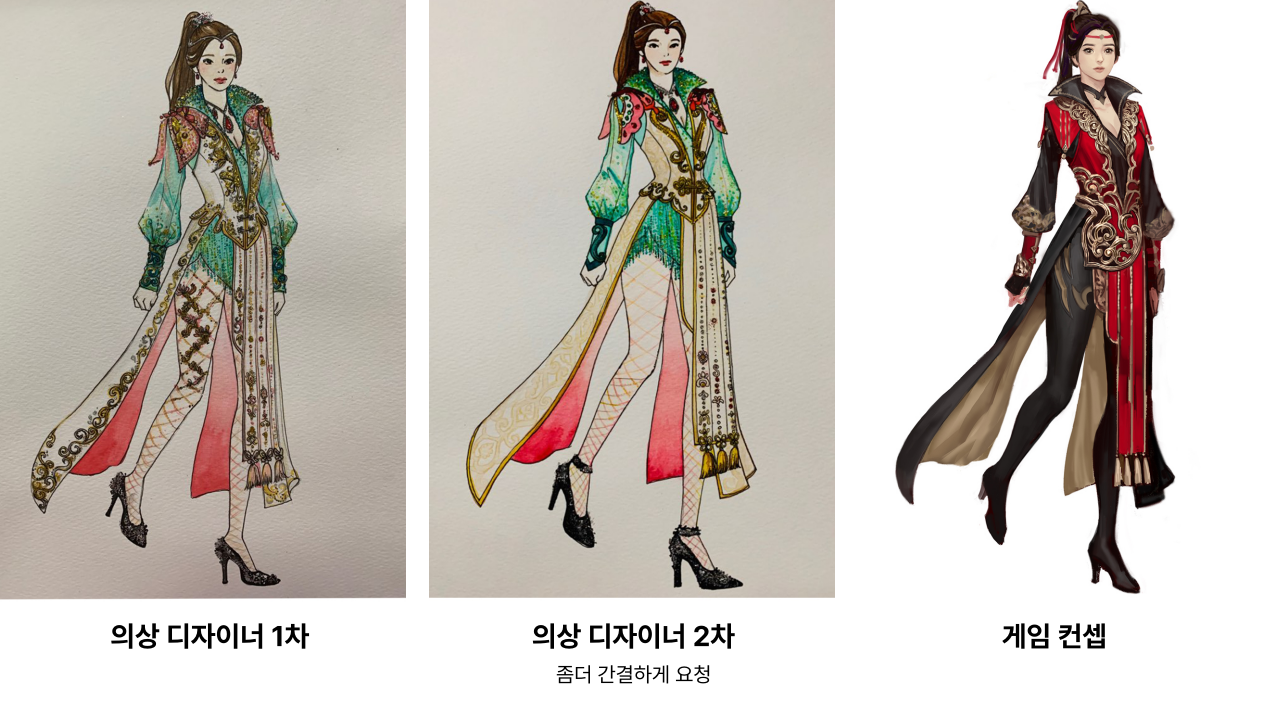
The first design concept, created by a fashion designer, featured bold silhouettes and lavish embellishments. In the second concept, some elements were removed, resulting in a much cleaner overall form. It’s clear that the designer carefully considered which parts to emphasize and where to tone things down, all while maintaining the splendor of the fantasy world. After several rounds of design refinements, the final game concept is completed.
Creating clothing that captures the unique splendor and imagination of fantasy while still feeling like something someone in that world would actually wear and live in.
It is precisely this subtle sense of realism that brings fantasy characters to life.
Clues to the Imagination Found in Ancient Artifacts
So, where do designers find inspiration when creating these fantasy costumes?
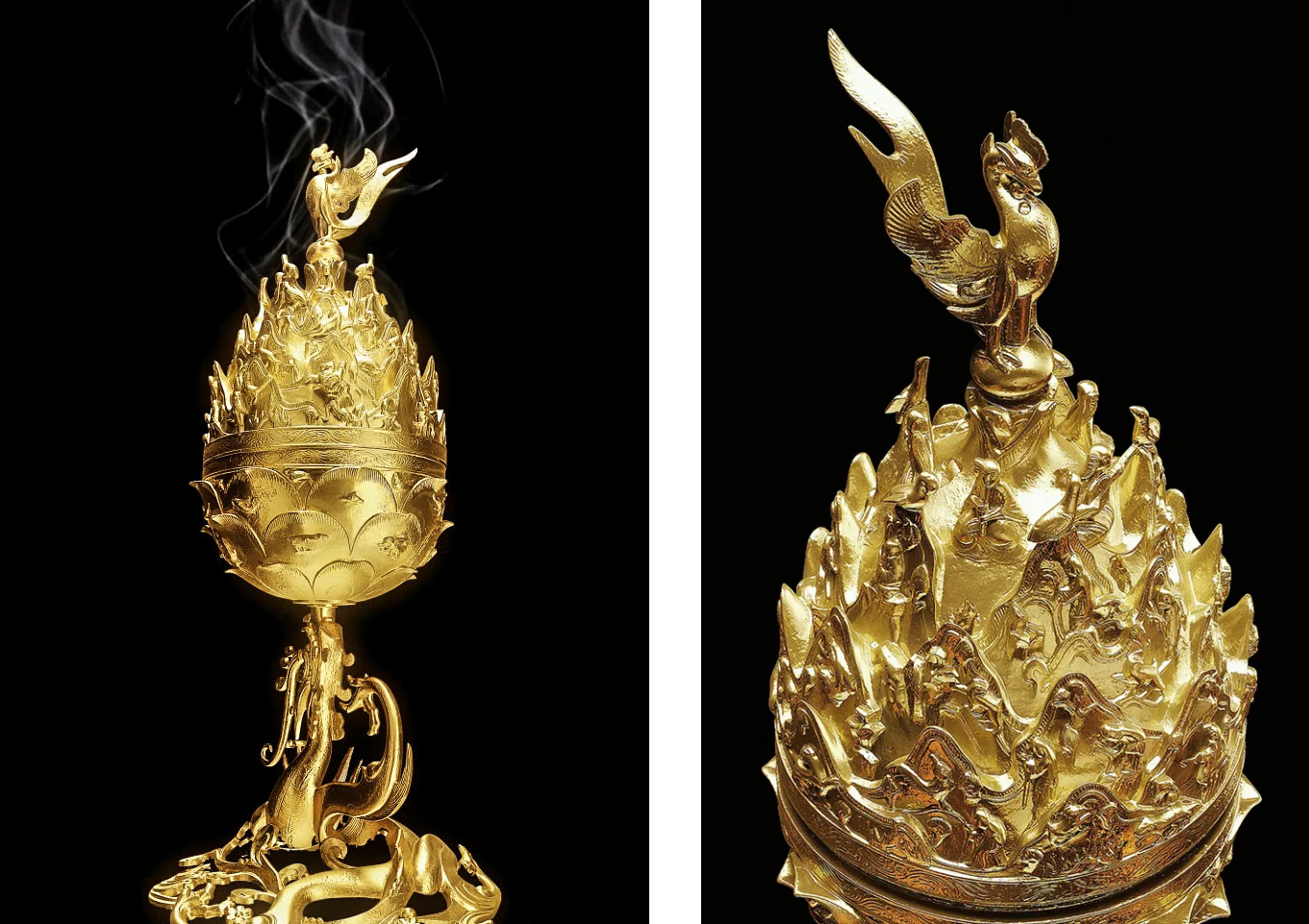
Hwang Min-taek, Concept Team Leader at WEMADENext Graphics Studio, who is in charge of the visual concept for 〈MIR4〉, says he draws inspiration from ancient cultural heritage when exploring the visual appeal of Eastern fantasy. The cultural artifacts that particularly caught his attention are the Baekje gilt-bronze incense burner and the celestial beings depicted in the Mogao Caves in Dunhuang, China.
If you take a close look at the 7th-century Baekje gilt-bronze incense burner, you’ll find that a surprisingly vast world unfolds within this small vessel. Amid the layered mountain peaks are immortals, animals, and figures playing musical instruments, with a phoenix perched at the very top. This is precisely what captivated Team Leader Hwang. It is the fact that a single artifact encapsulates both the lives of the people of that era and the world of their imagination. He says he wants to incorporate this kind of design—one that reveals new meanings the more closely you examine it, beyond its outward splendor—into 〈MIR4〉 as well.
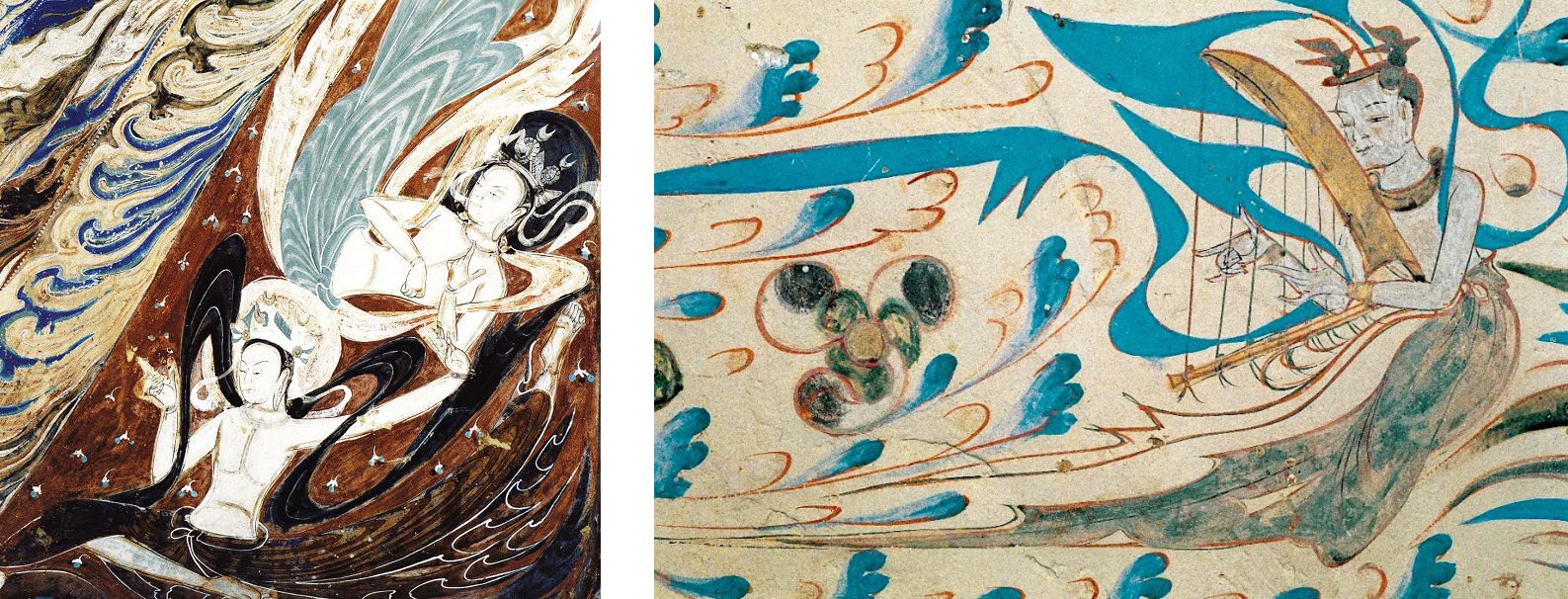
Another reference is the celestial beings depicted in the Mogao Caves of Dunhuang, China. The cloth and hems of their robes, worn by these heavenly beings soaring through the sky, trace graceful curves as if cutting through the wind. This flow of lines can also be seen in the collars, sleeves, and long, trailing ornaments of the characters in 〈MIR4〉. Unlike modern clothing, which falls cleanly to follow the contours of the body, in Eastern fantasy, the flow of wide, long fabric itself becomes a key expressive element.
Cheonpa as seen in the 〈MIR4〉 6th Anniversary tribute video. You can see the sleeves and hem moving naturally with her steps, as well as the intricate details of her outfit.
A Pink-Haired Girl Appears Amongst Strong Warriors: The Spirit Summoner
A little girl dressed in yellow, holding a bell aloft. This is a scene from the Taiwanese Jiangshi film *The Spirit Master*. Although her appearance is quite different from that of the current Spirit Master, this girl was the starting point for the character. Subsequently, taking into account the image of a girl who is dark, mysterious, yet strong, we explored various possibilities through more than 100 design concepts.

The existing characters in 〈MIR4〉 generally had a strong and imposing presence. Perhaps because of this, Team Leader Hwang Min-taek explains that they wanted this new character to strike a balance with them while also adding a bright and lovable vibe that hadn’t been seen before.
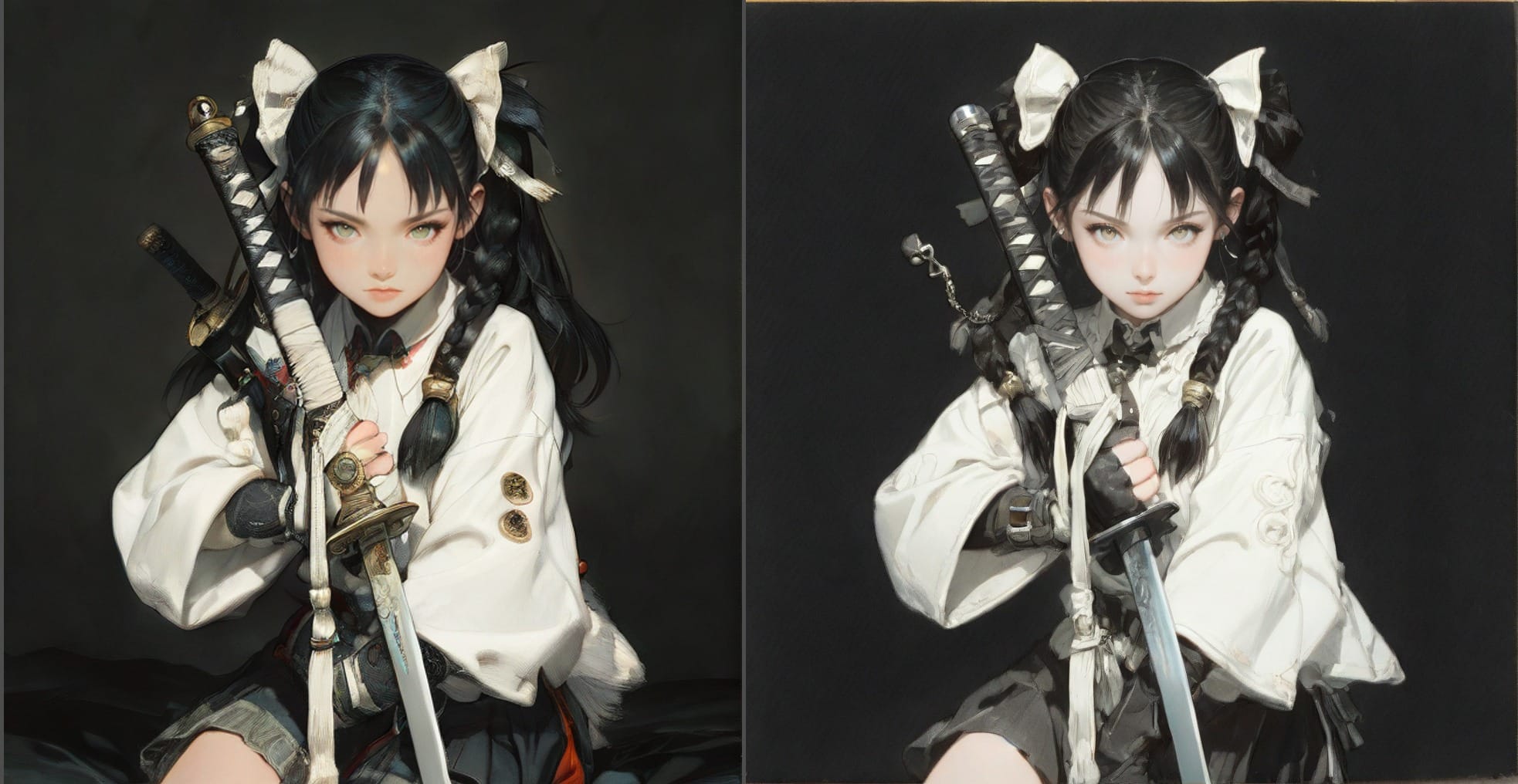
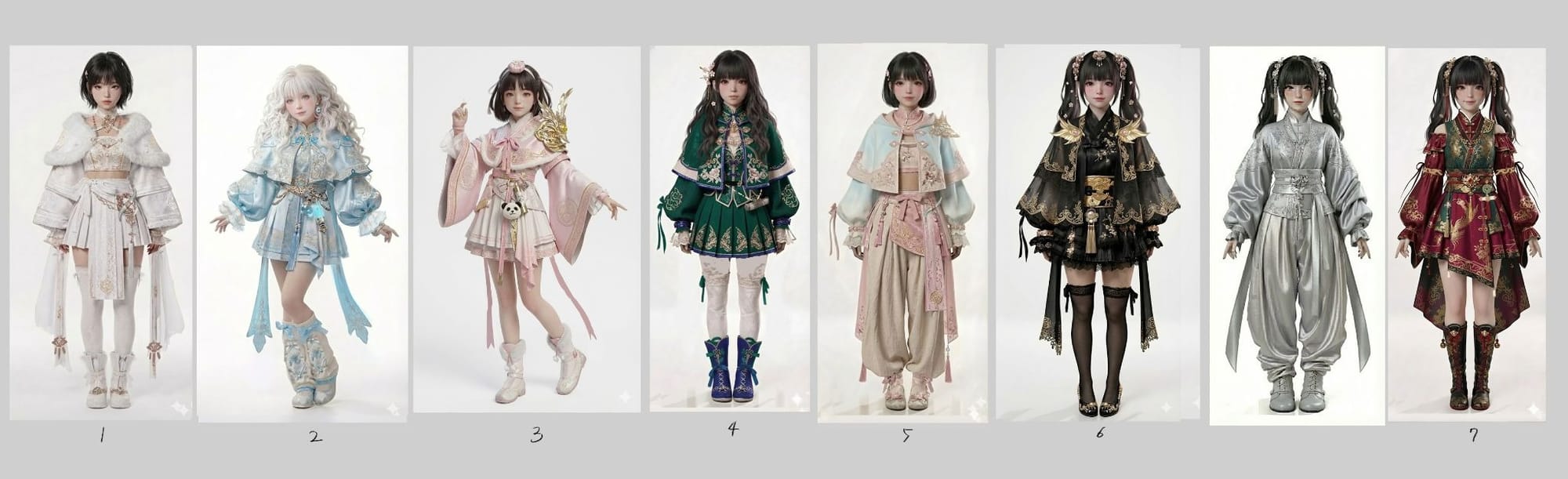
The choice fell on a petite girl dressed in a pink outfit. By adding a modern twist to traditional Eastern fantasy attire, and with her soft silhouette and bright colors, she created an image that stood out distinctly from the existing characters.
This unique personality is evident even in the smallest details of her outfit. She wears a flower-shaped accessory in her hair, and a small doll—the kind a girl might have chosen herself—is attached to her waist. The weapon she holds also contributes to the cute vibe with its rounded shape and vibrant colors. When she fights, the hems of her clothes and her accessories are designed to sway naturally with her movements.
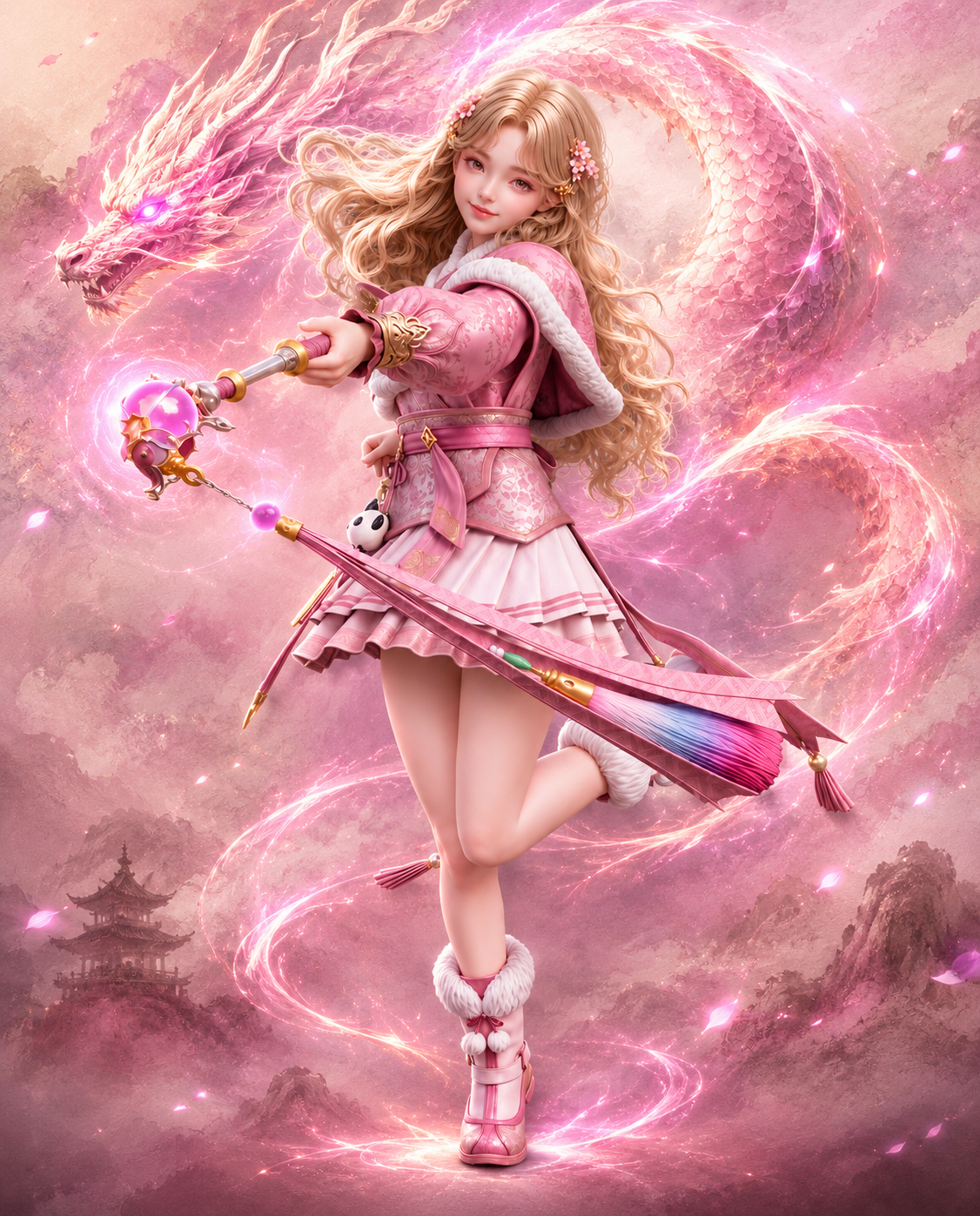
However, the true appeal of this Spirit Summoner lies in her intense combat style, which stands in stark contrast to her adorable appearance. The spirits summoned by this little girl aren’t always just cute. At times, she summons intimidating spirits to unleash powerful attacks. The gap between the expectations created by her appearance and her actual combat performance is what makes this character even more memorable.
〈MIR4〉 An in-game scene showing the Spirit Master using a combat skill.
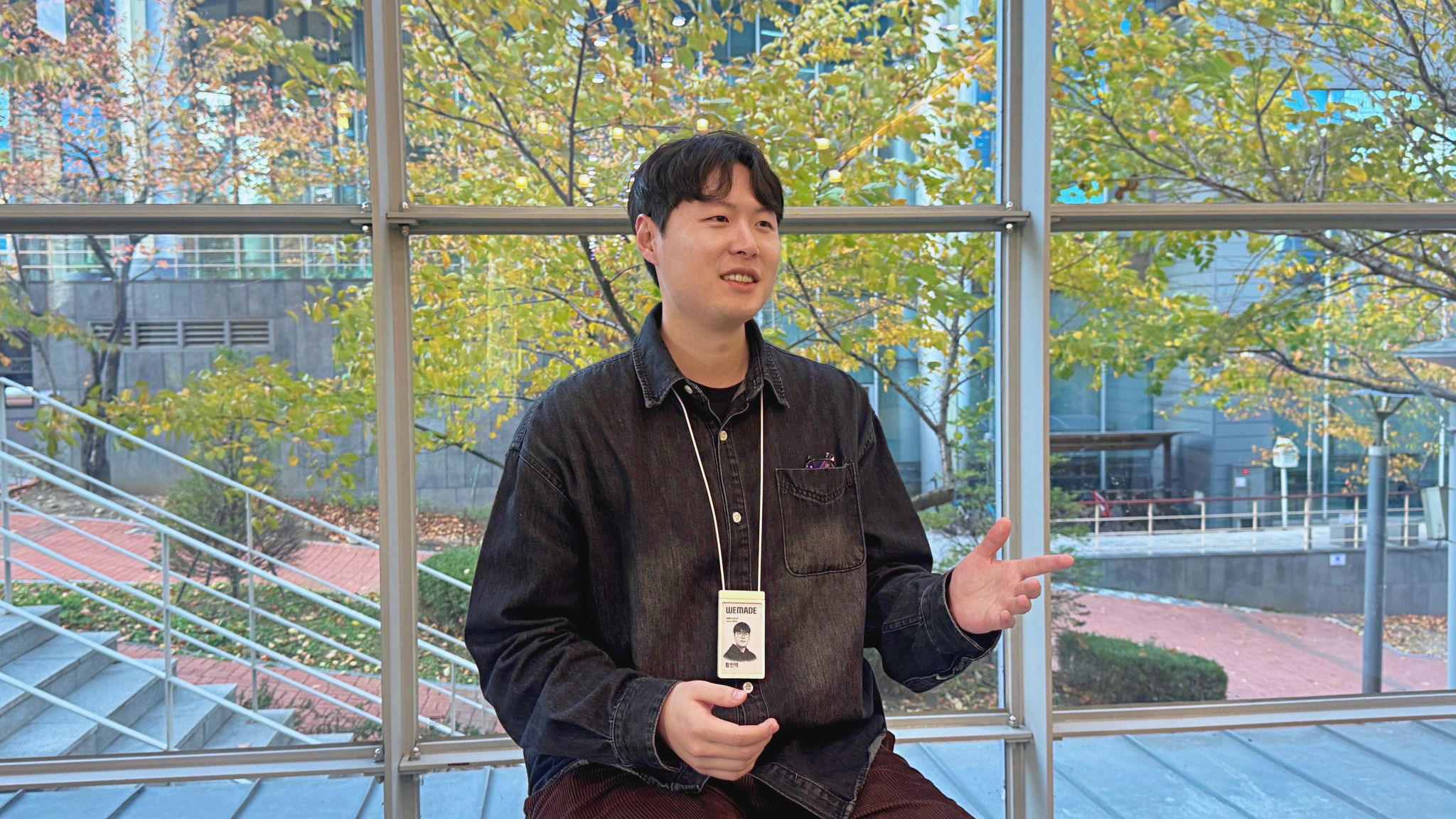
For Team Leader Hwang Min-taek, who was in charge of the concept art for *Spirit Master* from start to finish, this project was also a special experience.
“Because I was able to capture a charming appeal that wasn’t seen in the original Mir, the Spirit Master is a character I’m particularly fond of. Going forward, I want to continue breaking away from familiar formulas to create characters that will leave a lasting impression on players.”
An adorable girl who appears among a cast of tough characters. When these contrasting charms come together, the world of 〈MIR4〉 becomes even more vibrant.
In the next battle, if you pay close attention to the hem of the garment,
From Jennie’s music video outfits to other recent trends, it seems people are finding the beauty in older things to be even more fresh and innovative. Even traditional elements that were once considered old-fashioned can offer unexpected freshness when reinterpreted with a modern sensibility.
The character outfits in *MIR4* are also part of this creative endeavor. The game reinterprets the beauty found in ancient artifacts and paintings through 〈MIR4〉’s unique aesthetic, shaping them into characters that could realistically inhabit that world. Rather than simply reviving traces of the past, the game breathes new life into them by infusing them with fresh stories.
Up until now, while playing games, we may have unconsciously overlooked the clothes our characters were wearing. But next time, it might be worth taking a moment to linger a little longer on the patterns embroidered on the collars or the curves of the sleeves as they move.