Do you have a favorite character?
It doesn’t matter if it’s from an anime, a manga, or a game.
At first, you might have just liked the art style, or maybe you liked their voice. Or perhaps a single line of dialogue from a particular scene has stayed with you for a long time.
But at some point, you start to want to know more of their story. You find yourself waiting for new episodes, looking up other people’s interpretations, and sometimes even checking out merchandise or fan art. Your love doesn’t stop at the character—it naturally spreads to the world in which that character lives.
The power of subculture games begins right there.
Subculture games are a genre that allows players to hold onto this feeling a little longer within the game. As you meet characters, nurture them, and follow the story, you’ll find yourself eagerly awaiting the next chapter before you know it. Players invest time in the characters, and as that time accumulates, the characters become even more meaningful.
That’s how attachment is formed—through the process of investing time and emotion.
If you trace the roots of today’s subculture games, the very first essence you’ll find is the experience of “raising” characters by investing time and emotion.
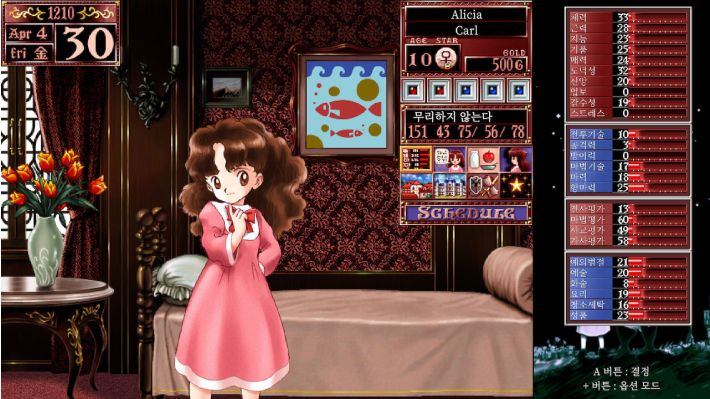
A prime example is "Princess Maker", released in 1991, which placed the experience of raising a single character at the heart of the game. Players managed the character’s stats, considered career paths, and made repeated choices in order to raise the character successfully.
It felt as though the time I invested, the choices I made, and the successes and failures I experienced all seemed to accumulate within the character. As players watched the character before them gradually change, a sense of attachment grew in their hearts.
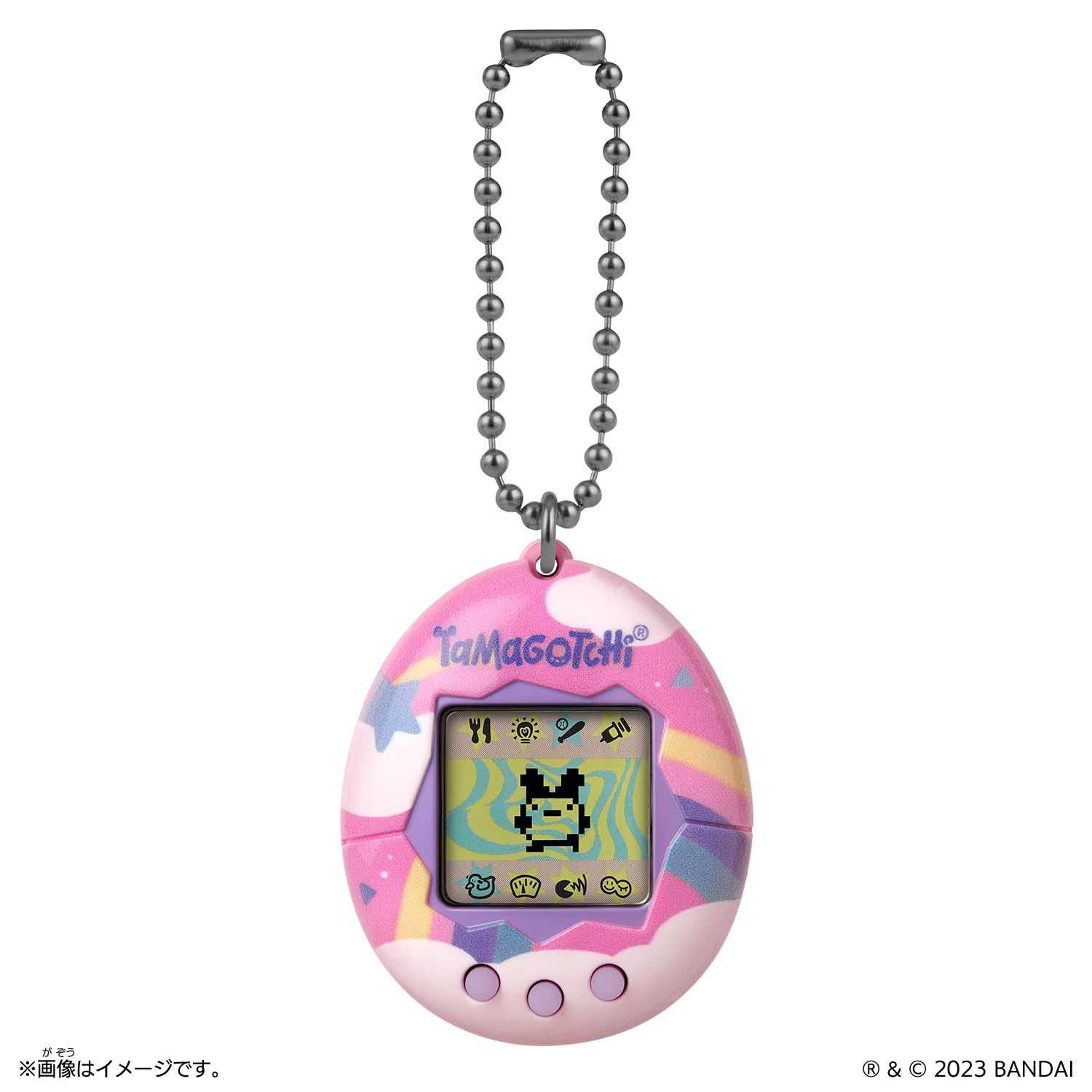
I have a similar memory of the "Tamagotchi" I raised when I was in elementary school. I would feed it, put it to sleep, and check on it constantly to make sure it was doing okay. I also remember feeling so upset that I cried when my Tamagotchi died because I hadn’t taken proper care of it.
Looking back now, it was just a simple toy, but my feelings at the time were quite serious. That’s because I spent time checking on it and taking care of it every day.
A Memorable Character Needs a Story as Much as It Needs Time
Once you’ve grown attached to a character while developing them, the story surrounding that character becomes important. When you learn why they fight, who they’re with, and what they’re trying to protect, the character becomes a more three-dimensional presence.
Once the story has built up sufficiently, your love for the character eventually spreads to the entire world in which they live.
This is why, in today’s subculture games, the story isn’t merely a backdrop for the game.
The world they inhabit is what makes players want to stay.
People start playing a game because they like the characters, but what ultimately keeps them playing is their immersion in the world where those characters live.
So, what kind of world should today’s subculture games present to players?
Many players are already encountering their favorite characters and following their stories through countless games and content. They won’t easily warm up to a new character just because it has appeared. Ultimately, it all boils down to one crucial question.
Is there a reason to invest my time and heart in this world again?
〈Lost Sword〉
〈Make Drama: MAD〉
〈N.O.A.H.〉
Even within the same “subculture game” genre, these three games address this question in different ways.
One draws players into a familiar legend, one focuses on the emotions and relationships between characters rather than grand events, and another asks players to make choices in a post-apocalyptic world.
Lost Sword: Bringing an Ancient Legend to Life
Release Date: January 2025 | Developer: CodeCat | Publisher: Wemade Connect | Official Website: Click here
E Lost SwordE is based on the legend of Camelot, epitomized by King Arthur and the Knights of the Round Table. Although terms like “holy sword,” “order of knights,” and “Britannia” appear, the game does not begin by unfolding the vast narrative of that world.
Instead, it plunges the player directly into battle. Thanks to the premise that the real-world character “Ethan” is transported to the legendary land of Britannia, the player is also immediately drawn into this unfamiliar, mythical world. As you enter the world of Britannia, you meet knights, fight alongside them, and through the voices brought to life by voice actors, naturally come to understand each character’s personality. The relationships between characters are also gradually revealed in the process, and before you know it, the once-strange Britannia becomes the stage on which the player moves.
It’s not a world where you have to understand every detail from the start to enter; it’s a world you naturally become familiar with as you move and fight alongside the characters. It’s an approach that lets you intuitively grasp the world through play, rather than forcing you to study the lore.
The game allows players to jump right in with a lighthearted attitude, while naturally immersing them in the game world as they follow the characters and engage in combat. "Lost Sword" uses this approach to present the legend of Camelot—which could otherwise feel heavy—in a way that feels familiar to today’s players.
Make Drama: MAD, A World Where Relationships Become Stories
Release Date: June 2026 | Developer: Fluffy Duck | Publisher: Wemade Connect | Official Website: Click here
The title of "Make Drama: MAD" literally means “to create drama.” The development team explained that they wanted this game to go beyond simply collecting and leveling up characters; they hoped players would form relationships with the characters and create their own stories through the game. Just by looking at the title, you can tell what this game prioritizes.
When discussing "Make Drama: MAD", it’s hard to overlook the characters’ striking visuals. With illustrator “Snowball”—well-known as the art director of "Last Origin"—serving as creative director, the game showcases its distinctive, bold art style and vivid character designs right from the very first impression.
That boldness doesn’t stop at catching the viewer’s eye. "Make Drama: MAD" has created a world where modern characters, demons, angels, and medieval fantasy-style characters can all appear together. It has broadened the scope to allow characters with vastly different atmospheres to enter a single world and build their own stories and relationships.
Thus, the game begins with the characters’ visual appeal and flows into their individual backstories and relationships. Behind the eye-catching illustrations lie each character’s story and relationships, and players follow those relationships to create their own stories.
That is where the “drama” this game refers to is born. Rather than having a single massive event drive everything forward, the story gradually expands and relationships deepen as players spend time getting closer to the characters.
Noah: Questioning Choices in a Collapsed World
Release: Coming Soon | Developer: Retroket | Publisher: Wemade Connect | Official Website: Visit Now
While "Lost Sword" presents an ancient legend in a familiar way and "Make Drama: MAD" weaves stories around relationships with its characters, "Noah" begins in a much darker place.
The world of "Noah" is a futuristic dystopia set in a landscape that has already collapsed once. It’s imbued with a sense of dystopia and apocalypse, and the characters struggle to survive within it. As a result, the characters in this game aren’t just pretty and powerful figures—they look more like agents navigating a collapsed world.
Based on strategic turn-based combat, "Noah" encourages players to assess the battlefield and carefully consider their next moves. Rather than fast-paced action, the game places greater emphasis on the time spent carefully deciding which agents to deploy and in what order to move them.
Players will spend hours agonizing over how to survive alongside the agents in an already-collapsed world, weighing every choice along the way. That is the narrative Noah seeks to convey.
In this way, the player is not merely an observer watching the agents fight, but becomes immersed in the tension of the world they are struggling to hold together.
In this way, the player is not merely an observer watching the agents fight, but becomes immersed in the tension of the world they are struggling to hold together.
That is the story that "Noah" sets out to tell.
Although the worlds depicted in these three games are all different, they ultimately lead to the same destination.
Meeting a character you love, following that character's story, and—before you know it—finding yourself investing your time and heart in that world.
At one time, subculture was often dismissed with the term “otaku” or viewed through a negative lens. However, today’s subculture can no longer be described as the exclusive domain of a select group of enthusiasts. A deep attachment to characters and highly loyal fan bases have already become a major driving force behind the gaming market.
Some people may still call it the “otaku mindset.” But that mindset is no longer a mere hobby to be taken lightly. What was once dismissed as a deep obsession has now become a force that proudly drives an entire genre.